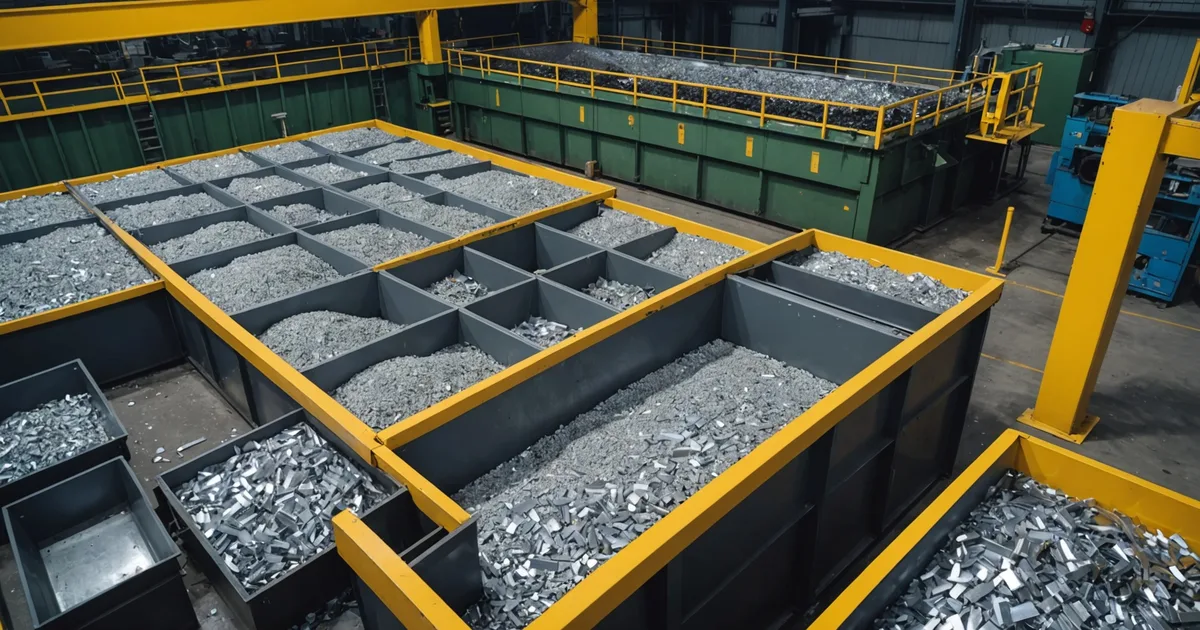
Scrap and rework are rarely labeled as first-order costs in a manufacturing P&L. They show up as material variances, labor inefficiencies, and line utilization gaps — distributed across accounts in a way that makes the total number hard to see. But when you add it up, most discrete manufacturers are spending 5 to 15 percent of production cost on defects that weren't caught early enough to prevent. That's the number inline AI inspection is positioned to move.
The distinction between "catching a defect early" and "catching it at end-of-line" matters more than it initially seems. An end-of-line or final inspection reject is a part that has consumed all of its production value — material, machining time, assembly labor, handling — before anyone determines it's not shippable. An inline inspection reject catches the defect while the part is still early in its value-add journey, or at minimum, before additional operations compound the cost.
Where scrap cost actually accumulates
To think clearly about where inline inspection creates leverage, it helps to map where cost is added through the production sequence. Consider a machined aluminum housing that goes through five operations: blank cutting, roughing, semi-finishing, finishing, and coating. Each operation adds value. Each operation also adds cost.
A porosity defect that originated in the casting blank is present through all five operations. If your only inspection happens after coating, you're paying for five operations on a part that was defective before the first one started. An inline inspection station after the blank stage — checking for obvious surface porosity clusters before roughing — would pull that part from the line before any machining value was added.
This is the core efficiency argument for early inline inspection: the earlier in the process you identify a defect, the less production cost has been consumed before the reject decision. The scrap cost of a pre-machined blank is material cost only. The scrap cost of a finished and coated housing includes all five operations, coating material, and handling time.
The math changes depending on where defects originate. If most of your defects are cosmetic finish issues that only appear during the last operation, pulling inspection back to an earlier stage doesn't help — you can't catch post-coating scratches before coating. But if your defect profile includes upstream causes — die wear in stamping, tool deflection in machining, contamination in raw material — earlier detection has real cost leverage.
Rework vs. scrap: the distinction that changes ROI
Not every defect produces a scrapped part. Many produce a reworked part — one that requires additional labor to bring into spec. Rework cost is often undercounted because it's absorbed by direct labor budgets and doesn't appear as a discrete line item the way material scrap does.
Inline inspection interacts with rework differently than with scrap. For a defect class that's reworkable — a surface scratch that can be polished out, a dimensional deviation that can be corrected with a secondary operation — the inspection question becomes: catch this part now, before it goes to the next step, or catch it after additional value has been added. Early inline detection enables a clean rework decision before more cost is stacked on top.
For non-reworkable defects, the economics are simpler: the earlier the inspection reject, the lower the wasted cost per reject. But for reworkable defects, the ROI calculation has to include rework labor cost, rework cycle time impact on line throughput, and the scrap rate of the rework operation itself (not all rework attempts succeed on first pass).
We're not claiming inline AI inspection will always reduce rework cost. On lines where rework is the standard response to dimensional deviations and the rework operation is fast and reliable, adding an aggressive inline inspection gate might actually increase net cost by pulling parts for rework that would have self-corrected. The right question is whether your current rework operations are creating downstream quality risk that's not being measured — reworked parts that pass but are at the edge of tolerance and fail in assembly. That's a harder argument to make without process data, but it's the more honest version of the ROI case.
A concrete example: stamped bracket line
Consider a stamping operation running a structural bracket at 140 parts per minute across two shifts. The line produces about 130,000 parts per week. The existing inspection process is manual — one inspector per shift, stationed at end-of-line. Current scrap rate is approximately 2.1% based on rejected parts logged at shipping.
At 2.1% scrap, that's roughly 2,730 scrapped parts per week. The per-part fully-burdened cost — material, stamping time, handling — is around $4.80. Weekly scrap cost: about $13,100. Monthly: approximately $56,700.
A pilot with inline AI inspection at the die exit — before any secondary operations — ran for six weeks. The model was trained on 63 labeled defect examples covering the three primary defect classes on that part: edge cracks, corner burrs, and surface scoring from die pickup. Model training ran overnight on the customer's existing IPC.
Over six weeks, the inline inspection system flagged parts at a rate that translated to a net scrap rate of 0.31% — the difference being parts caught at the die exit before secondary handling, not at end-of-line. The secondary operations cost saved per caught part averaged $1.60. That secondary-operations savings alone — ignoring the reduction in escaped defects reaching shipping — was worth roughly $4,200 per week on this line.
This example has specific numbers and a specific part type. Different scrap rates, part costs, and line speeds will produce different results. The structure of the analysis — map where in the production sequence defects originate, calculate cost-per-part at each inspection decision point, measure the delta — is transferable to any discrete manufacturing line.
What inline inspection doesn't fix: root cause vs. detection
Inline inspection detects defects. It doesn't eliminate the process conditions that create them. This is a boundary worth stating plainly: if your die is wearing and producing edge cracks on 3% of parts, adding an inline vision inspection gate will ensure those parts don't reach your customer or downstream assembly. It will not reduce the 3% defect rate at the die.
What inline inspection can do — and this is where the operational intelligence argument is stronger than the pure scrap-cost argument — is give you a precise, timestamped, categorized record of defect occurrence over time. That record enables process engineers to correlate defect rate spikes with specific machine events: tool changes, shift transitions, ambient temperature variation, coolant concentration drift. Without that data, process improvement relies on periodic audits and engineer intuition. With it, root cause analysis has a starting point.
Procunit logs every defect detection with a timestamp, part image, model confidence score, and defect classification. A quality engineer looking at a week of that data can see whether edge cracks cluster at the start of the shift (tooling warm-up behavior), in the final hour before maintenance (die wear), or uniformly throughout (raw material issue). That visibility is separate from the scrap reduction argument, but it's often what quality engineers find most useful after the first month of operation.
Setting up the measurement to verify scrap reduction
Before you run a pilot with the goal of measuring scrap reduction, you need to establish what you're measuring against. Your current scrap rate number — whatever is being reported in your quality system — almost certainly undercounts the real scrap because field escapes, rework failures, and downgraded-to-scrap parts in secondary operations are often tracked separately if at all.
The cleanest baseline is a four-to-six week period of carefully tracked end-of-process reject data, including all reject categories, before the pilot starts. Run the pilot, track the same categories in the same way during the pilot period, and compare. Don't try to compare against historical monthly averages — process conditions vary too much month-to-month for that comparison to be clean.
Scrap rate reduction is measurable. But measuring it correctly requires the same discipline on both sides of the comparison. Pilots that produce inconclusive data often failed at baseline definition, not at the inspection system.